Pigs Become Indistinguishable from Humans
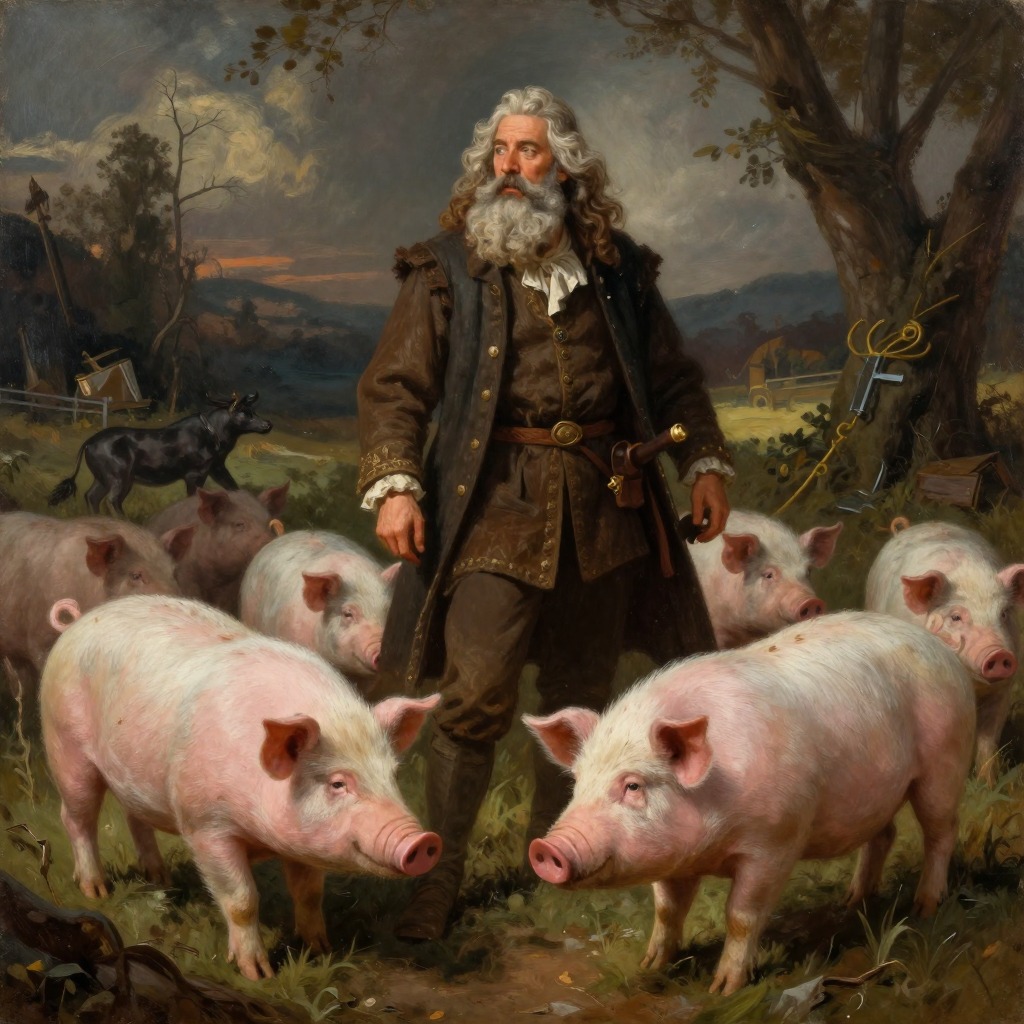
Animal FarmThe final transformation of the pigs is physically enacted when they begin walking on their hind legs. Squealer, the first to appear in this posture, strolls across the yard with awkward but perfect balance, followed by a long file of pigs. Napoleon himself then emerges, majestically upright, carrying a whip in his trotter. The sheep, which had years earlier been taught to bleat "Four legs good, two legs bad" as a mantra of Animalism, now burst into a new chant: "Four legs good, two legs better." This single word change—"better" replacing "bad"—signals the abandonment of the revolutionary principle that any creature who walks on two legs is an enemy. The pigs' adoption of the human posture, combined with the whip, the symbol of human tyranny that the animals had once burned in triumph, completes a visual reversal of the Rebellion's founding acts.
This physical transformation was the culmination of a long process of economic and political consolidation. The pigs had long since taken over the farmhouse, slept in beds, and consumed the choicest food. The original Seven Commandments, which had forbidden such practices, were quietly amended: "No animal shall sleep in a bed" became "No animal shall sleep in a bed with sheets"; "No animal shall drink alcohol" became "No animal shall drink alcohol to excess." The Sixth Commandment, "No animal shall kill any other animal," acquired the qualification "without cause." Meanwhile, the farm's growing prosperity accrued only to the pigs and the dogs. The other animals worked longer hours for less food, and Squealer's statistical tables proved that conditions were improving, even as the animals felt hunger and cold. The pigs' brainwork—filling papers called "files," "reports," "minutes," and "memoranda" that were then burned—was presented as essential labor, yet no pig produced a single mouthful of food.
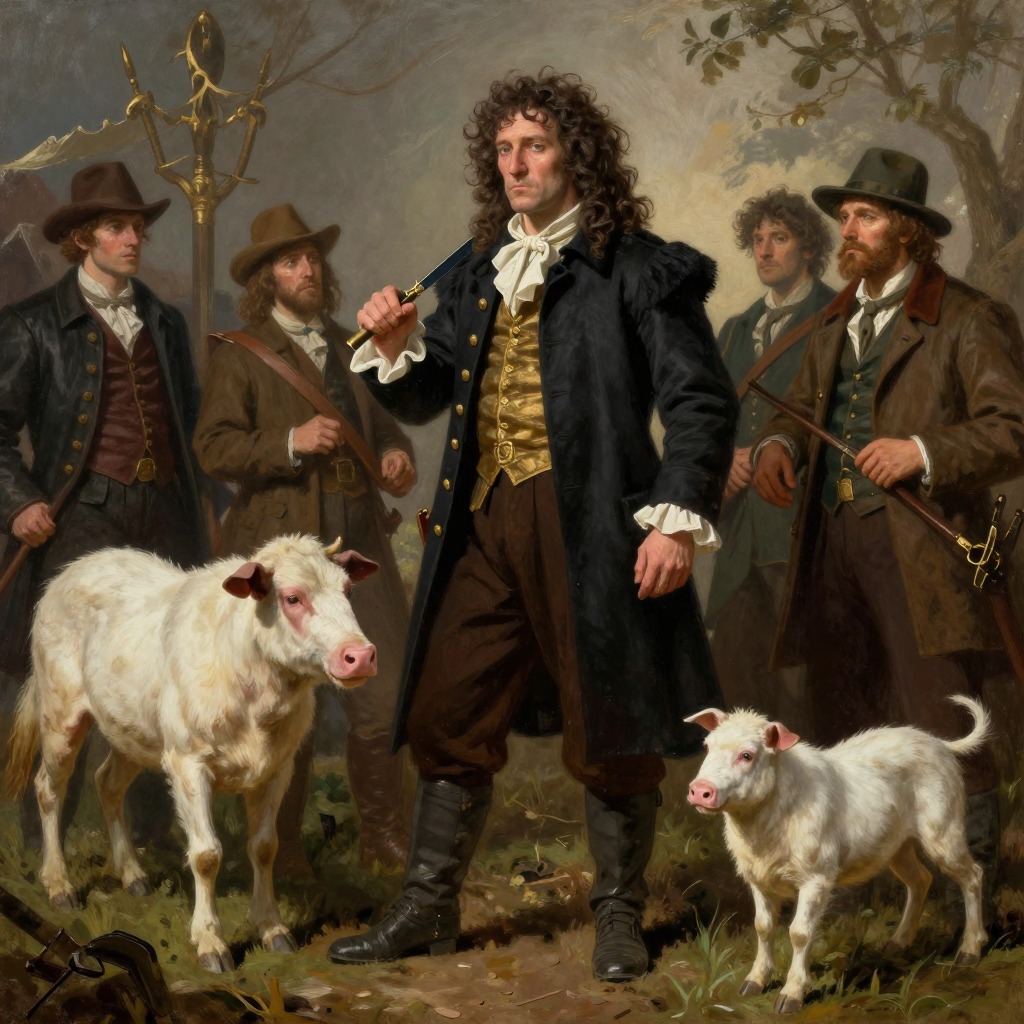
On the final evening, a deputation of neighboring farmers, including Mr. Pilkington of Foxwood, is invited to the farmhouse. The pigs, now dressed in human clothes—Napoleon in a black coat, ratcatcher breeches, and leather leggings, his favorite sow in Mrs. Jones's watered silk dress—sit around the dining table playing cards and drinking beer. Mr. Pilkington proposes a toast to the prosperity of Animal Farm, but Napoleon, rising to respond, announces that the name "Animal Farm" has been abolished; henceforth it is to be known as "The Manor Farm." The green flag, once marked with a hoof and horn, is now plain green. The custom of marching past the skull of Old Major has been suppressed, and the use of "Comrade" as a form of address is forbidden. The toast is drunk to the prosperity of The Manor Farm. Then the game resumes, but a violent quarrel erupts over an ace of spades. The twelve voices shouting in anger are all alike. The animals outside look from pig to man and from man to pig, but it is impossible to say which is which.
The final line of the book crystallizes the complete reversal: the pigs have become indistinguishable from the humans they once rebelled against. The original ideals of Animalism—no animal shall live in a house, sleep in a bed, wear clothes, drink alcohol, or engage in trade—have been systematically violated. The commandment "All animals are equal" has been replaced by "All animals are equal but some animals are more equal than others." The pigs, who began as the cleverest and most revolutionary, have become the new oppressors, and the other animals, exhausted and hungry, can no longer tell the difference between their masters and the old ones.